
What Defines Ultra Luxury Real Estate
What is Ultra Luxury Real Estate?
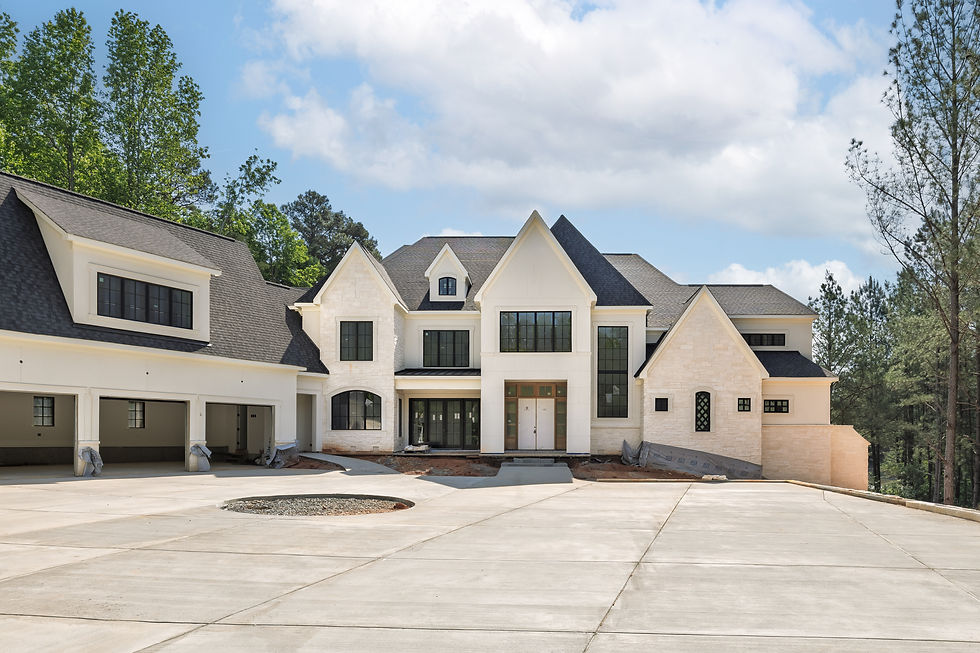
In the world of real estate, there are houses, there are luxury homes, and then there is the Ultra-Luxury Estate. In the Charlotte market, the term "luxury" is often applied broadly. It can describe a beautiful $1.5 million renovation in Dilworth or a spec home in South Charlotte. When we cross the $5 million threshold—and certainly as we approach the $10 million to $15 million range—we enter a different asset class entirely. At David Rogers Builders, we find that clients at this level are not just buying more square footage. They are investing in a level of engineering, artistry, and longevity that standard residential construction cannot provide.
A $5 million home is not just a "bigger" version of a $1 million home; it is a fundamentally different organism. These types of homes are built differently and function differently. If you are planning a legacy project in Myers Park, Eastover, or an equestrian estate in Weddington or Waxhaw, NC, it is crucial to understand where that investment goes. It is not always in what you see—often, the real value lies in the invisible skeleton that ensures your home stands for generations.
Here is a transparent look at the anatomy of an ultra-luxury build, and how the choices we make drive both the price and the Return on Investment (ROI).
The Invisible Skeleton: Commercial Engineering in a Residential Skin
When a home exceeds 8,000 or 10,000 square feet, wood framing alone is often insufficient to achieve the architectural vision. The "wow factor" you see in magazines—massive walls of glass that vanish into pockets, floating staircases, and open-concept great rooms with no visible support columns—requires structural steel. Structural steel allows longer unsupported spans compared to wood framing, giving architects the freedom to design dramatic, open spaces without bulky columns or load-bearing walls.

The Cost of Openness
When people talk about the cost of openness in an ultra-luxury real estate home, they’re referring to the trade-offs—financial, functional, and experiential—that come with designing and building extremely open, expansive spaces. In ultra-luxury homes, openness isn’t just about large rooms; it’s a core part of the aesthetic and lifestyle.
Standard lumber has limits. To support a 40-foot ceiling span without a forest of columns obstructing your view, we at David Rogers Builders integrate commercial-grade red-iron steel beams. This type of support allows us to create those breathtaking, airy volumes that define modern luxury. While this significantly increases the budget compared to stick framing, it is the only way to achieve the architectural gravity-defying feats that represent a $5M+ estate.
Open spaces require large, uninterrupted spans without walls or columns. Unlike typical homes that rely on load-bearing interior walls, ultra-luxury designs often push the structure to exterior shells or hidden frameworks, which can be expensive.
Costs include:
Engineered support systems (e.g., steel beams, long-span trusses)
Specialized installers for curtain walls and large glass openings
Floor and roof reinforcements
Higher labor costs for non-standard construction
Silence is Golden: Commercial HVAC
One of the most overlooked "luxuries" is silence. In a standard home, you hear the HVAC kick on; you feel the draft. In an ultra-luxury estate, the climate control should be felt, not heard. We utilize VRF (Variable Refrigerant Flow) systems, similar to those used in high-end hotels. These systems allow for precise temperature control in individual zones—so the wine cellar, the main suite, and the gym can all be held at different temperatures simultaneously without the roar of a central furnace.
Indoor units are whisper-quiet, and software-controlled zoning gives precise comfort in bedrooms, offices, and entertainment areas. At David Rogers Builders, we also integrate hospital-grade air filtration and humidity control systems to protect not only your health but also the integrity of your art collection and hardwood floors.
You can spend six figures on finishes, acoustics, and glass, and a cheap residential HVAC will still:
Whoosh loudly in living areas
Click on/off at night
Vibrate through framing
Commercial-grade, variable-speed systems are designed to run longer, slower, and smoother, which means:
No sudden startups.
No air “blast.”
No bedroom hum at 2 a.m.
If you can hear your HVAC, it’s not luxury.
The Nervous System: Smart Home Backbones
A true smart home is not just about having an Alexa in the kitchen. It is about a centralized, rack-mounted server room that controls lighting, security, audio, shading, and climate. We pre-wire the home with low-voltage infrastructure (Cat6a, fiber optics) that creates a "nervous system" capable of handling technologies yet to be invented. Low-voltage infrastructure is a massive upfront cost, but it prevents the home from becoming obsolete in five years.
1. Wired and Wireless Networks
Enterprise-grade Wi-Fi with multiple access points and wired Cat6/Cat6a/Cat7 backhaul to eliminate dead spots — essential for large, multi-structure estates.
Dedicated network closets/racks with switches, routers, and UPS (uninterruptible power), minimizing outages and centralizing management.
Network segmentation/VLANs to isolate smart devices, guest access, and security systems for performance and safety.
2. Common Protocols
Wi-Fi: High bandwidth for cameras, media, and voice assistants.
Z-Wave & Zigbee: Low-power mesh networks ideal for sensors, locks, thermostat controls.
KNX & LonWorks: Wired/open standards for whole-house automation and building systems (lighting, blinds, HVAC).
3. Security and Privacy Architecture
In luxury real estate, networks must be secure by design:
Multi-Tier Security
Encrypted communications, firewalls, and segmented networks
Biometric access systems (facial ID, fingerprint)
AI-enhanced surveillance with anomaly detection
Remote monitoring tools allow homeowners and security teams to track and respond instantly.
The Price of Perfection: Amenities and Finishes That Drive Cost
Once the structure is sound, the budget shifts to the visible artistry. Clients often ask, "Why does this tile cost $10 a square foot, while this one costs $200?" or "Why is this kitchen $300,000?"
The price increase at this level is driven by scarcity, customization, and labor intensity.
1. Rare and Imported Materials
At the $5M+ level, off-the-shelf materials are nonexistent. We are sourcing materials with provenance.
Stone: We aren't just buying marble; we are flying clients to quarries in Italy or Vermont to select specific blocks of Calacatta Gold or Onyx. We are looking for unique veining that can be book-matched (mirrored) on a shower wall or kitchen island. The cost here isn't just the stone; it's the logistics of shipping heavy, fragile slabs and the master craftsmanship required to cut them with zero margin for error.
Exotic Woods: We move beyond standard oak to Walnut, Rift-Sawn White Oak, or mahogany. These woods are often fumed or treated with reactive stains to achieve the depth of color that paint cannot mimic.
2. Bespoke Millwork and Cabinetry
In a standard home, trim is purchased by the linear foot. In an ultra-luxury estate, the library, the dressing room, and the kitchen are built by cabinet makers who view wood as a medium for art.
The Kitchen: This is the most expensive room per square foot. Price drivers include walnut interiors for drawers, custom metal inlays, appliance garages with integrated power, and high-gloss lacquered finishes that require 12 layers of sanding and polishing.
Wall Cladding: We rarely leave drywall exposed. Walls wrapped in shiplap, reeded timber, or paneling that integrates flush doors make the entrances to rooms disappear into the architecture.
3. The "Jewelry" of the Home
Hardware and lighting are the tactile touchpoints of luxury.
Lighting: We move away from mass-produced fixtures to foundry-made pieces. A single chandelier in a grand foyer can cost $30,000+ and serve as a hanging sculpture.
Hardware: Door handle weight matters. We use solid brass or bronze hardware that feels substantial in the hand. These are often "living finishes" that patina over time, adding character.

The Investment: ROI in the Ultra-Luxury Market
When building at this magnitude, "Return on Investment" takes on a different meaning. You aren't flipping a house; you are parking capital. While you should build for your own enjoyment, specific finishes and amenities serve as value anchors, ensuring the property retains its value over the decades.
1. The Kitchen and "Back of House" (Highest ROI)
The kitchen remains the undisputed king of ROI. However, in 2025, the value added is the Scullery or Prep Kitchen. Buyers in this bracket demand a "show kitchen" that stays pristine for entertaining, paired with a hidden, fully functional industrial kitchen where the real work happens. Investing in dual Sub-Zero preservation columns, a Wolf commercial range, and two dishwashers yields high returns. These brand names act as signals of quality to future buyers.
2. The Primary Wellness Suite
The Master Bath has morphed into a private spa. Features that hold high value include:
Heated Floors: A non-negotiable expectation.
Steam Showers: With digital controls and aromatherapy.
Closet Systems: A boutique-style closet with glass-fronted wardrobe doors and island storage is a significant selling point.
ROI Verdict: High. A dated or basic master bath is the first thing a future buyer will deduct from an offer.
3. Outdoor Living and Hardscaping
In Charlotte’s climate, outdoor space is usable 9 months of the year.
The Pool: While pools are sometimes debated as ROI positive, in the ultra-luxury market, not having a pool (or the space for one) is a detriment. An infinity-edge pool with a limestone deck and an integrated hot tub is expected.
The Lanai: A covered outdoor living room with motorized screens, a fireplace, and an outdoor kitchen (pizza oven, grill, refrigeration) effectively adds 1,000 square feet of living space to the home.
Landscaping: Mature privacy screening is priceless. Installing 15-foot Magnolias or Hollies to block neighbors instantly increases the perceived value and exclusivity of the estate.
4. Structural Integrity and "Boring" ROI
Surprisingly, the things that offer the best long-term value are the ones that protect the house.
Slate or Copper Roofing: These have added immense curb appeal over the past 100+ years.
Brick and Stone Exteriors: Low maintenance and timeless.
Impact Windows: High-efficiency, aluminum-clad wood windows (like Pella or Marvin) are a critical selling point for energy efficiency and noise reduction.

The Collaborative Process
Perhaps the most significant difference in a $5 million build is the team. You are not just hiring a contractor; you are assembling a board of directors for your project.
At David Rogers Builders, we work in a "Design-Build" capacity or in close concert with your architect and interior designer from day one. This collaboration is vital. When the builder is involved early, we can value-engineer the structural steel, advise on the feasibility of the pool placement, and ensure that the HVAC runs don't conflict with the coffered ceiling design.
This process eliminates the heartbreak of designing a home that costs twice the budget to build. It ensures that every dollar spent contributes to the tangible value and beauty of the finished estate.
Building Your Legacy
An ultra-luxury estate is more than a shelter. It is the backdrop for your family’s most important moments. It is where your daughter walks down the staircase for prom; it is where you host holidays for 50 people; it is where you find quiet on a Tuesday evening.
Achieving this requires a builder who understands not just the blueprints but also the lifestyle you are building. It requires a commitment to excellence that goes beyond the code book.
If you are ready to discuss a vision that exceeds the ordinary, we invite you to start the conversation.


